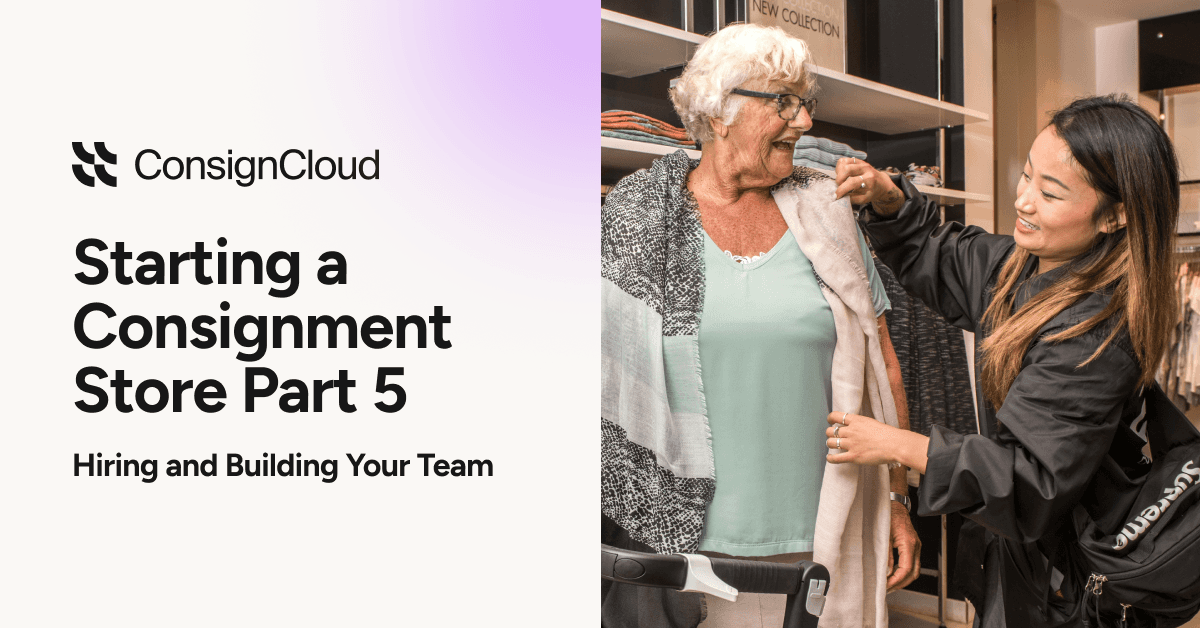
Starting a Consignment Store Part 5: Hiring and Building Your Team

Kent Atkinson
Oct 21, 2025
Hiring and Building Your Team for a New Consignment Store
Even with a small team of 1–5 people, the right hires can keep your shop running smoothly and free you up to focus on growth. In this post, we’ll cover who to hire first, creative staffing options, basic U.S. labor laws for employers, how to onboard and train your team (including using ConsignCloud), and examples of key roles. By the end, you’ll feel confident about building a team you trust to help your new consignment store thrive.
Who to Hire First in a Small Consignment Shop
For a small local store, your first hire is often someone to handle day-to-day customer service and routine tasks so you can focus on bigger-picture responsibilities. Many new owners find a sales associate or shop clerk as the ideal first employee, a person who can run the cash register, assist shoppers, and tidy the floor while you work on sourcing inventory, marketing, and planning.
In fact, a common first hire is someone to take care of routine tasks and customer contacts, which frees you (the owner) to concentrate on strategic planning and growth.
Paid and Unpaid Staffing Options
When you’re just starting out, you might not need full-time staff. Fortunately, there are flexible staffing options for small stores:
Part-Time Employees: Part-timers are a popular choice for new shops. You can hire someone for a few shifts a week to cover peak hours or weekends. This keeps payroll costs manageable while ensuring you have coverage when you need it. Many consignment owners start with one or two part-time sales associates to help on the sales floor and at the register. Part-time staff bring in help without the commitment of a full-time salary, and you can always increase their hours (or add more staff) as your store grows.
Family and Friends: It’s common for new entrepreneurs to recruit family members or friends to help in the early days. A spouse might handle the register on Saturdays, or a friend might volunteer to set up displays. This can be a great short-term solution, but be mindful of keeping the arrangement professional.
Interns: An intern (perhaps a local college student studying business or fashion merchandising) can be a win-win: they gain experience and you get extra help. Unpaid internships are legal in the U.S. only if the arrangement primarily benefits the intern (education, academic credit, etc.) rather than the business. If you go the intern route, consider offering college credit or a stipend, give them real learning opportunities (like helping plan a small event or managing social media for your store), and keep their schedule flexible for school.
In summary, paid staff (even if part-time or modestly compensated) is the safest route for a for-profit shop. Unpaid arrangements like interns or family help can supplement your team, but follow the rules to avoid legal issues. When in doubt, consult an employment attorney or use resources like the Department of Labor guidelines to ensure your staffing plan is compliant.

If you’re still setting your store’s direction, explore different consignment business models before you start hiring.
Understanding Basic U.S. Labor Law and Hiring Your First Employee
Bringing on your first employee doesn’t need to be complicated. The main thing to understand is that store staff (like cashiers, clerks, or intake workers) are employees, not contractors. If you set their schedule and direct their work, they go on payroll. Contractors are for outside help, like a bookkeeper or designer, who work independently on specific projects.
Once you decide to hire, you’ll need an Employer Identification Number (EIN) from the IRS. It’s free and quick to get online, and it’s what allows you to legally run payroll. From there, you must withhold payroll taxes from each paycheck and send them to the IRS and state. Many owners use payroll software or a payroll service to handle this automatically so they don’t have to calculate or file taxes themselves.
When you bring someone on, there’s a small stack of paperwork. New hires fill out a W-4 for tax withholding and an I-9 to confirm they can legally work in the U.S. Most states also require you to report each new hire online. You’ll keep these records on file, and you’ll need to have the required workplace posters (like minimum wage) up in your store’s back area.
Finally, most states require workers’ compensation insurance once you hire even one employee. This protects both you and your team if someone is hurt on the job. Between that and general liability coverage, you’ll be properly insured.
The bottom line: classify staff correctly, get an EIN, use a payroll system, handle the basic forms, and carry workers’ comp. Once you’ve done it once, it becomes routine. Hiring the right person will save you time, improve customer service, and ultimately make your store stronger.
Onboarding and Training New Team Members
Onboarding in a consignment store should focus on both customer and consignor needs. Introduce new hires to your mission, layout, and consignment process, then train them on intake tasks like evaluating items, entering them into your system, tagging, pricing, and explaining terms to consignors. Role-play common scenarios such as answering “How do I consign?” and practice handling payouts, unsold returns, and customer questions. Finish by ensuring they’re comfortable using your consignment software for inventory, consignor accounts, and sales so they can work confidently from day one.
Key Roles in a Consignment Store Team
In the beginning, your first hire may juggle multiple duties, but as you grow you can define specialized roles.
Intake & Inventory Associate: Manages incoming consignments, greets consignors, and guides them through intake. Duties include reviewing condition and brands, deciding what to accept, pricing according to guidelines, entering items into ConsignCloud, tagging, and sorting for display. They also track which consignor each item belongs to and may handle markdowns or expired stock.
Sales Associate / Cashier: The customer-facing role that drives daily operations. They greet shoppers, help with sizing or suggestions, run the POS, process returns, answer consignor questions, and issue payouts if needed. When not with customers, they tidy racks, update displays, and restock. Outgoing multitaskers shine here, as the role balances sales, customer service, and store upkeep.
Inventory Organizer / Stock Coordinator: Works behind the scenes to keep merchandise organized and accurate. Responsibilities include moving new items to the floor, managing backstock, updating tags and markdowns, pulling expired inventory, and maintaining supplies. They ensure customers see fresh, organized merchandise and consignors’ items are properly tracked.
Accountant / Analyst
As your store grows, ConsignCloud’s detailed reports create opportunities for a part-time or in-house accountant or analyst. Tools like Sales Summary, Payouts, and Tills Reports simplify bookkeeping and cash reconciliation, while Inventory Insights reveal profit trends and best-selling categories. This role can handle financial tracking, prepare payouts, and turn data into insights that guide pricing and buying decisions—helping you run a more efficient, profitable shop.
As the store expands, you might add roles like assistant manager or marketing coordinator, but these three cover the essentials for a team of 1–5.
How ConsignCloud Supports Hiring and Managing Team Members
Training staff is easier when the tools they use are simple. ConsignCloud’s intuitive interface means new employees can learn how to run sales, process consignments, and manage customer interactions with minimal training. Additionally, role-based permissions let you control who can access sensitive data, so employees only see the functions they need. By keeping the learning curve low and protecting your business data, ConsignCloud helps you build a confident, capable team while saving you hours of onboarding time.
Jump to Part 6: Inventory Management and Pricing. Learn how to intake, price, and track consigned items. This post explains common consignment pricing strategies, markdown cycles, and how to keep your inventory organized.
In this post