Painted Tree Boutiques Closes Doors Nationwide

Samuel Dickison
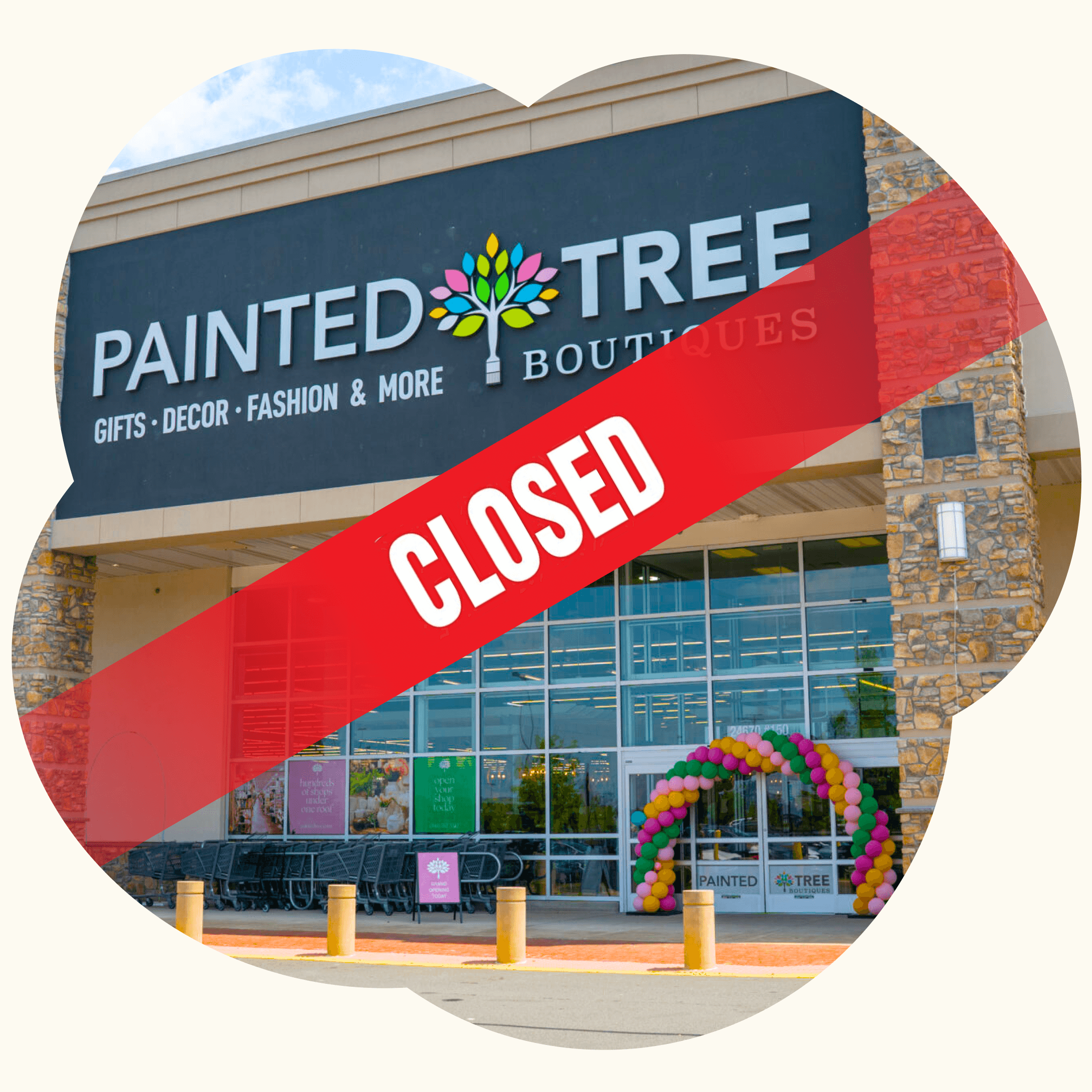
Painted Tree Announces Closure
Painted Tree, a leading vendor mall operator, announced Tuesday that it would be shutting down business operations immediately.
The abrupt news came as a shock to the vendors who rented space in one of Painted Tree’s 60+ locations around the country. Sellers, many of whom paid rent ahead of time and are still owed money for sales, were given 10 days to clear out their inventory. Even within that window, some struggled to gain access to properties leased by Painted Tree from third-party landlords.
Since the announcement, Painted Tree has filed for Chapter 7 bankruptcy, a legal process that essentially means they have ceased to operate immediately with no plan to reopen in the future.
The Business Model
Painted Tree was founded in 2015 in Arkansas and grew quickly across the country, establishing strong footholds in Texas, Tennessee, and the midwest. On the face of it, their business model made good sense: provide a physical space for independent vendors to sell their wares. Vendors paid rent and a percentage of their sales in exchange for floor space and the opportunity to be a part of what was for many a beloved shopping destination.
But as Painted Tree’s sudden closure shows, being part of a larger operation can have its downsides. What you gain in convenience and marketing clout you often give up in control. It’s not hard to find former Painted Tree vendors complaining of poor communication, slow payment, and a loss of community support.
Why Painted Tree Closed
Painted Tree's official statement on the closure is unsurprisingly vague, citing "rising costs, shifting market conditions, and changes in consumer behavior" as the factors behind their decision. It's the kind of language that tells you everything and nothing at once. But looking at the broader context, a few likely culprits come into focus.
Changes in Consumer Behavior
The market for handmade, artisanal, and independent goods is, by most measures, on a sustained upward climb. The U.S. handicrafts market alone is projected to nearly double by 2034, as consumers increasingly turn away from mass-produced goods in favor of something more personal and intentional. Gen Z is leading the charge, being more drawn to unique, storied, or environmentally conscious goods than to the social cachet once offered by mainstream brands.
But a rising tide doesn't lift all boats equally—and the same shift in consumer behavior that's fueling independent retail is also accelerating the move online. Shoppers who once browsed vendor malls on a Saturday afternoon now have Etsy, Facebook Marketplace, Depop, and a dozen other platforms at their fingertips. The appetite for small-batch and one-of-a-kind goods is real; it's the preference for discovering them in a 30,000-square-foot brick-and-mortar space that's less certain.
Rising Costs
If the demand side of the equation was complicated, the supply side was arguably worse. Operating a sprawling national network of large-format retail locations is an expensive proposition under any circumstances—and the economics have only gotten harder.
Leasing giant retail spaces doesn't come cheap even though — in a cruel irony — many of Painted Tree's locations occupied the corporate sarcophagi left behind by bankrupt retailers like Bed Bath & Beyond and Sports Authority. Add in operational costs like employee wages across 60+ locations, utilities, software (Painted Tree previously used SimpleConsign, one of the pricier vendor mall softwares on the market), and insurance and the costs compound quickly across a national footprint.
Whatever the precise mix of factors, their decision to close — and the way they went about it — has left a wake of damaged livelihoods and unanswered questions.
What Painted Tree’s Closure Means for Vendors
For the vendors left holding the bag, the immediate reality is grim. Many paid rent in advance and are still owed money for sales already made. And under Chapter 7 bankruptcy, the prospects of seeing any of it are slim to none — vendors, as unsecured creditors, sit at the back of the line behind banks, investors, and landlords. Painted Tree’s official statement to vendors states that they will have to file a proof of claim as part of the bankruptcy proceedings. If you're owed money by Painted Tree, you unfortunately can’t count on seeing it anytime soon, if ever.
What vendors can count on is each other. A Painted Tree Survivors Facebook group has collected nearly two thousand members at the time of writing and many local businesses have opened up space for their displaced neighbors. That kind of community response says something both about the people Painted Tree attracted and about the resilience of the independent retail world more broadly.
And resilience is something we've seen firsthand in the vendors and small business owners we work with every day. If anything, we wouldn't be surprised if Painted Tree's closure sets off a wave of entrepreneurs striking out on their own — more independent, more in control, and more motivated than ever. And if you've been affected by the closure, please reach out. We work with many vendor malls around the country and may be able to help you find your next home.